

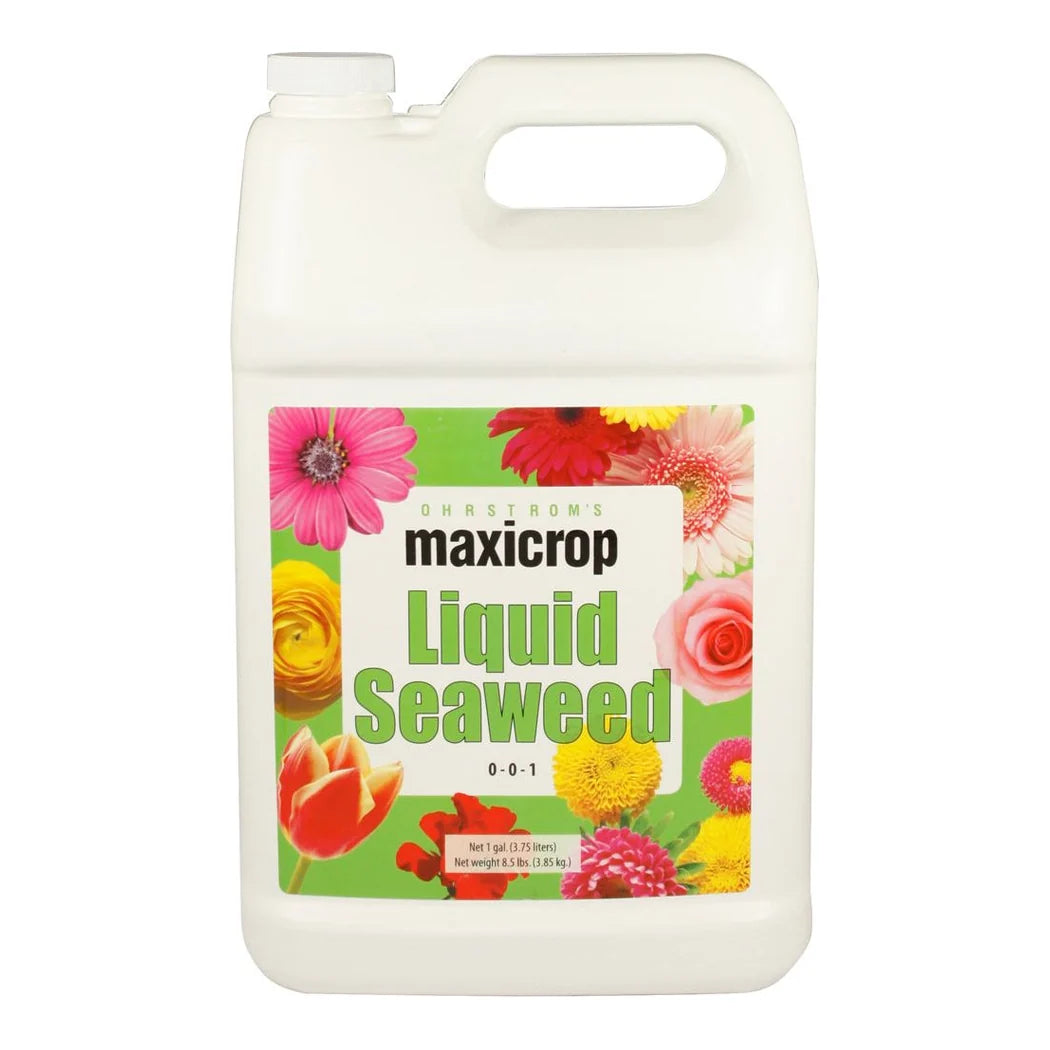
Maxicrop Original Liquid Seaweed in a Weekly Feeding Routine
This is the seaweed extract a lot of growers learned on, and the formula has stayed deliberately simple. The label guarantees 1.0% soluble potash, derived from Ascophyllum nodosum harvested off the Norwegian coast. That low number is the point. Maxicrop is a growth stimulant and trace-element source, not a potassium feed, so it rides alongside a base program without changing it. For potted plants, transplants and foliar work, Maxicrop's rate is 1 oz per gallon, which is about two tablespoons, once a week. Seeds and bulbs get an overnight soak in that same strength, then a watering-in with it after planting. Hydroponic tanks run far leaner, at 2 oz per 100 gallons added once a week or every 10–14 days. That hydro dose is small enough that it barely registers on an EC pen. Foliar passes work best early in the light cycle, with a fine mist on both leaf surfaces before the canopy warms. Shake the jug before measuring, since the dark liquid settles between uses. It is a brown, earthy-smelling concentrate, and a heavy hand in a recirculating system can tint the water and feed biofilm.
What a Liquid Seaweed Fertilizer Does Between Base Feedings
Maxicrop Liquid Seaweed earns its place during the stretches where plants are being asked to recover. Rooting cuttings, bare-root transplants and seedlings coming out of trays are the classic uses printed on the label. Outdoors, the same jug covers vegetable beds, shrubs, trees and lawns on a monthly spray. The gallon suits a home garden or a couple of tents, making a little over a hundred gallons of drench at the potting rate. Run strictly in a hydro reservoir, that same jug stretches to thousands of gallons, so it lasts a long time. The larger jug is for greenhouse benches and market gardens drenching every week through the season. One honest limit is analysis. Anyone chasing a measurable potassium bump in late flower needs a real PK product, because this one will not move that needle. Growers who already run a kelp-based organic line may also find it redundant. Where it fits best is a synthetic or salt-based program that has no seaweed in it at all.
Key Features
- Norwegian Ascophyllum nodosum: Cold-water brown seaweed is the standard source for kelp extracts and carries a broad trace-element profile.
- Guaranteed 0-0-1: Low analysis means it will not throw off a base feed chart when added every week.
- Four Label Uses: Root drench, foliar spray, overnight seed soak and hydroponic reservoir dosing from one jug.
- Lean Hydro Rate: Only a couple of ounces treats a large reservoir, so recirculating systems stay clean.
- Transplant and Cutting Support: Label directions call for it on seedlings, cuttings and bare-root stock before and after moving them.
- Two Jug Sizes: A 1 gallon and a 2.5 gallon jug cover home gardens up through weekly greenhouse drenching.
Technical Specifications
| Specification | Value |
|---|---|
| Guaranteed Analysis | Soluble Potash (K2O) 1.0% |
| NPK | 0-0-1 |
| Derived From | Ascophyllum nodosum seaweed (Norway) |
| Form | Liquid concentrate |
| Potted Plants, Transplants, Foliar | 1 oz (about 2 tbsp) per gallon, weekly |
| Seeds and Bulbs | Overnight soak at 1 oz per gallon |
| Lawns | 1–2 tbsp per gallon per 1,000 sq ft, monthly |
| Hydroponic Reservoir | 2 oz per 100 gallons, every 7–14 days |
| Sizes | 1 gallon, 2.5 gallons |